Keeping New Jersey Home and Adding a Second Home in South Florida
The shore house covers July. A home on the South Florida coast covers January, a short flight from Newark.
Many New Jersey families already know what a second home asks of them from a house at the shore: the flood policy, closing it up in September, the call when a pipe gives way.
Create My Florida Winter Home Plan
Find Your Florida Lifestyle
Tell us where in New Jersey you are moving from, your budget, what matters most (beach access, walkability, a larger home, luxury living or retirement) and when you plan to move. The page recommends the communities and the homes for sale that fit, and the same answers start your plan.
Homes Matching Your Criteria
Live listings from the MLS for each community, by the kind of home: waterfront, condominiums, houses and new construction.
Your first step: BreakThru Florida Winter Home Plan
Before You Buy a Winter Home, Know Which Buildings Allow Your Plans and What the Months Away Will Cost
A winter home is judged by the months you are not in it. Can the association stop you renting it out? Who checks it after a storm? What does it cost to carry without a homestead exemption? The plan starts with how you want to use the home and how long you will be here each year, and ends with a short list of condos, villas or houses whose rules fit, what each would cost to own all year, and a way to see them without flying down for every showing.
What you receive
- A consultation about how many months you will spend here, who will use the home and whether it will ever be rented
- A comparison of the South Florida areas that suit a seasonal owner, with the cost and the convenience of each
- A shortlist of homes whose association rules allow your plans: lease terms, guests, pets and approvals checked before you tour
- A carrying cost review for the homes you like: tax without homestead, insurance, flood, association dues and the utilities that run while you are away
- Introductions to home watch, storm preparation and management services for the months you are not here
- A tour plan: live video tours now, and one visit scheduled so it covers the finalists
What happens next
- Tell us where you live now, how long you would stay each year, your budget and whether the home will be rented when you are away.
- A local agent replies within one business day to schedule your consultation.
- Your agent prepares the area comparison, the shortlist with each building's rules, and the carrying cost review.
- You tour by video or in person when you are ready, and decide what happens next.
Free and without obligation. Nothing you tell us is shared with a seller, and you sign a buyer agreement only when you are ready to tour.
What should a New Jersey owner know before buying a second home in South Florida? That the home will stand empty in hurricane season, so storm protection and flood coverage come first; that your tax bill follows a new assessment rather than the seller's homestead bill; that New Jersey keeps taxing your income, Florida rent included; and that holding the home in a trust can spare your family a second probate.
Many New Jersey families already know what a second home asks of them from a house at the shore: the flood policy, closing it up in September, the call when a pipe gives way. A South Florida home turns that calendar around. It is the place you use from December to April, and it stands empty in the storm months. Most of what the shore taught you still applies. This page covers what is different, and how to buy well while New Jersey stays home.
A Winter Home Instead of a Summer One
At the shore, the house works hardest in summer and sits closed in winter. In South Florida it is the reverse: you will be there from December to April, and the residence will be empty from June through November, which is hurricane season. That one fact shapes the purchase. Impact rated windows or shutters, a roof or a building with a known storm record, an insurer comfortable with an owner who is away, and someone who enters after a storm all matter more here than a third bedroom does. In a condominium tower, the staff and the association carry much of that; in a house, you arrange it.
Flood Zones, Read the Florida Way
Superstorm Sandy taught New Jersey to read a flood map, and the same habits pay off here. Ask for the FEMA flood zone of the property, its elevation certificate and how the lowest floor compares with the base flood elevation. Newer houses and towers are generally built higher, which can lower the premium. The coastal high hazard zones, marked V on the maps, carry the strictest building rules. Compare a federal flood policy with private flood coverage, and in a condominium ask what the association's master policy covers and what your own unit policy must add. Ask the seller about past water in the home, in writing.
Why Your Tax Bill Will Not Match the Seller's
New Jersey buyers watch property taxes closely, so this matters. Florida reassesses a home at its market value when it sells. A seller who lived there as a homestead may have enjoyed an exemption and years of the Save Our Homes cap, and neither passes to you on a second home. Your bill follows the new assessment and the millage set by the county, the city, the school board and special districts. After the first year, the assessed value can rise by up to 10% a year under the cap for non homestead property. Ask for an estimate based on your price, and have your CPA place it beside your New Jersey bill.
Your New Jersey Residency and Your Estate
A second home in Florida leaves your New Jersey residency unchanged, and New Jersey taxes a resident's income from everywhere, including rent earned in Florida. Title deserves attention too. A Florida home owned in your own name can require a separate probate proceeding in Florida after a death, on top of the one at home, which is why many owners hold a second home in a revocable trust. Whether that suits your family is a question for your New Jersey estate attorney and a Florida attorney together, and it is easier to settle before the deed is drafted than after.
Newark, Fort Lauderdale, West Palm Beach and the Train Between
Newark has nonstop flights to Fort Lauderdale, Miami and West Palm Beach throughout the winter, so the search can follow the airport. Fort Lauderdale sits in the middle of the coast, within easy reach of Broward and southern Palm Beach County. West Palm Beach serves Palm Beach, Jupiter and the towns south of it. Between them, the Brightline train links Miami, Aventura, Fort Lauderdale, Boca Raton and West Palm Beach, which makes a home near a station easy to reach from any of the three airports and lets guests arrive without a car.
Water Behind the House or the Ocean Below the Balcony
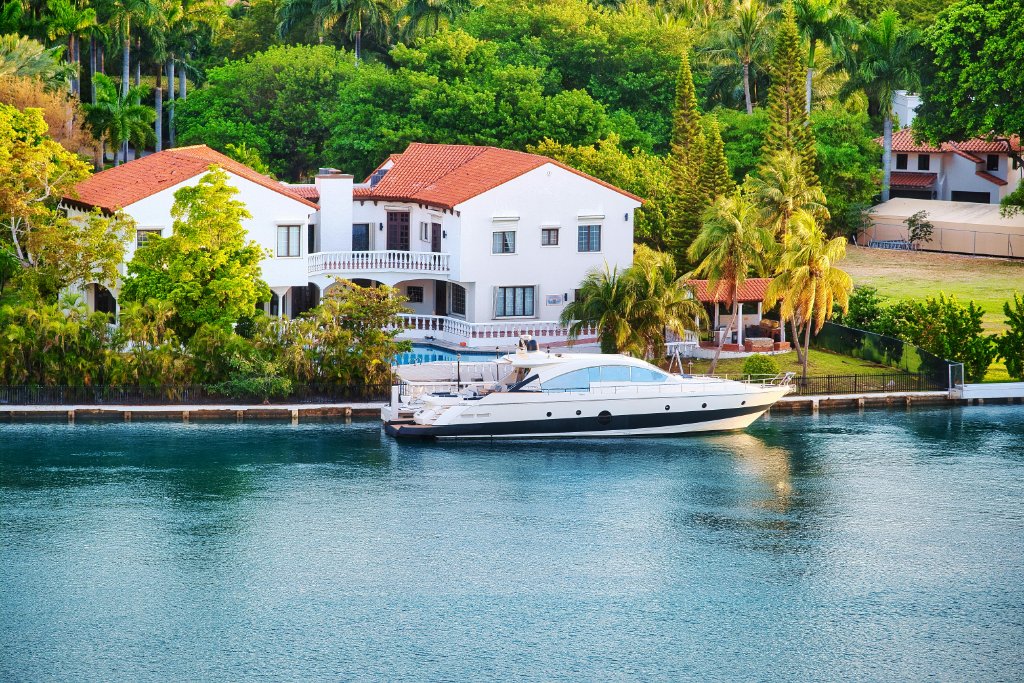
If you keep a boat on Barnegat Bay, look first at the canals. Fort Lauderdale and Pompano Beach have houses with private docks and routes to the ocean through Port Everglades and the Hillsboro Inlet. Check the fixed bridges between the dock and the inlet against your boat's height, the depth at low tide and the condition of the seawall, which is the owner's to repair. If the ocean is what you want to see rather than to sail, an oceanfront tower in Pompano Beach, Highland Beach or Boca Raton gives you the beach without a dock or a lawn to manage.
Condo Rules Decide How the Family Uses It
A second home is often shared: grown children in March, friends for a week, a tenant for a season. Every condominium answers those plans in its documents. Read the minimum lease length, how many leases a year are allowed and how tenants are approved; whether guests may stay when you are not there, and for how long; the pet rules; and any approval the association requires to buy. In older buildings, read the milestone inspection, the reserve study and any special assessment ahead. We check these documents for every finalist before you tour, so you never fall for a residence whose rules do not fit.
Buying It From Bergen County or Monmouth
Your agent starts with how the home will be used and what it has to cost to carry all year, then sends a shortlist with each building's rules, an estimate of taxes, insurance, flood and association dues, and live video tours. You fly down once to see the finalists. The inspection, the insurance quotes and the survey are arranged during the inspection period, and the closing documents can be signed in New Jersey before a notary or remotely where the title company accepts it, with each wire confirmed by telephone before it is sent.
Places New Jersey Buyers Often Compare
- Fort Lauderdale: Miles of canals off the Intracoastal, with houses that keep a boat at the dock and an inlet to the ocean minutes away, beside a working downtown.
- Pompano Beach: Oceanfront condos and a new hotel and residence tower beside the rebuilt pier, with canal homes near the Hillsboro Inlet and a fishing harbor.
- Boca Raton: Beachside condos east of the Intracoastal, club communities to the west and a downtown of shops around Mizner Park, with a Brightline station.
- Highland Beach: A quiet oceanfront town of condominium towers and waterfront houses between Boca Raton and Delray Beach, with the beach across the road or below the balcony.
- Jupiter: A river and inlet town at the north end of the county, with marinas, beaches lined by parks and low buildings, and houses on the Loxahatchee and the Intracoastal.
Each link opens that community’s page, with the homes for sale there now. Your agent adds the streets, the buildings and the trade-offs a listing does not show.
Before You Fall in Love With a Florida Home, Understand What It Costs to Own
The price is one number. The mortgage, property tax, homeowners insurance, flood insurance and association fees are the ones you pay every month. Put your own figures into the calculator, mark which ones are real quotes and which are still estimates, and compare the total with what you pay where you live now.
Why Work With BreakThru Realty Instead of Searching for Homes Yourself?
Anyone with an internet connection can search Florida homes. When you are buying from another state, the information you do not have matters as much as the listings you can see: the insurance that costs more than you expected, the special assessment the condominium has pending, the street that does not fit your daily routine. Our role is to help you understand what you are buying before you commit.
- Find Your Community. An area comparison built from your commute, budget, schools and the way you live, before any listing is sent, so you choose between real neighborhoods rather than reputations.
- Explore Homes Remotely. Your agent tours each home live on video, walks the street and the building, and attends the inspection with you on the line, so distance stops being the reason you miss the right home.
- Understand Ownership Costs. Property tax at the reset value, homeowners and flood insurance, association fees and reserves, set beside the price of every home you like, so the monthly number is real before you offer.
- Negotiate With Confidence. Local market information, an offer strategy talked through with you, and the contract deadlines worked through to closing, with the Florida specifics explained before they cost you.
- Close With Local Representation. A licensed Florida broker of record, a written buyer agreement before any tour, and a closing you can usually sign from where you live, with wiring instructions confirmed by phone.
You are not simply buying a home in Florida. You are making a decision about the life you want next. We will help you make an informed one.
Questions you may be asking
- We only come down for three months.
- Then the building matters more than the view. Some associations limit how often a unit may be leased or how long guests may stay, and a few restrict owners who are rarely there. The plan checks the documents of every finalist before you tour, so the rules fit the way you will use the home.
- Can we rent it out while we are up north?
- Often, within limits the association sets: a minimum lease length, a number of leases a year, an approval process and sometimes a waiting period after purchase. We read those rules with you and tell you plainly which homes on the list allow it and which do not. What the rent would be is a separate question we answer from closed leases nearby.
- Who looks after it when we are gone?
- A home watch service visits on a schedule, checks for leaks and power loss and prepares the home for a storm. We introduce providers who work in the building or the neighborhood, and we tell you what your insurer expects of an owner who is away for months.
- We are from Canada.
- Many seasonal owners are. The purchase itself works the same way; the differences are in financing, which a lender who handles foreign nationals can explain, in the tax when you sell, and in how many days you may spend in the United States each year. We work alongside your cross border tax adviser from the start.
- Should we rent a season first?
- If you have not spent a winter here, yes, and the plan can start with a seasonal rental in the area you are considering. A season tells you about the building, the beach and the drive to the airport in ways a tour cannot, and it costs far less than buying in the wrong place.
Create My Florida Winter Home Plan
Tell us where you live now, how long you would spend here each year and whether the home will be rented while you are away. A local BreakThru agent replies within one business day to schedule your consultation, then prepares the areas to compare, the homes whose rules fit and what each would cost to carry all year.
Call or email the brokerage directly: (786) 914-1017 · sales@breakthrurealty.com
Questions People Ask Before Moving
- Will a Florida second home lower my New Jersey taxes?
- No. Owning a second home in Florida does not change your New Jersey residency, and New Jersey taxes a resident's income from every source, including rent earned in Florida. Only a genuine change of domicile does that, which is a different plan. Your CPA should review any rental plans before you buy.
- Why will my Florida property tax be higher than the seller's?
- Because Florida reassesses the home at its market value when it sells, and the seller's homestead exemption and Save Our Homes cap do not pass to a buyer of a second home. Your bill follows the new assessment and the local millage. Ask for an estimate based on your purchase price before you sign.
- Do I need flood insurance on a South Florida second home?
- A lender requires it in a high risk flood zone, and many owners carry it anywhere near the water. Ask for the flood zone and the elevation certificate, compare a federal policy with private flood cover, and in a condominium learn what the master policy covers and what your own policy must add.
- Can family members use my Florida condo when I am not there?
- Usually, within the association's rules. Many buildings require notice of guests when the owner is away, limit how long they may stay and treat a stay that pays rent as a lease that needs approval. We read those rules for every finalist so the home fits the way your family will use it.
- Which South Florida areas are easiest to reach from Newark?
- Fort Lauderdale and the towns around it, because the airport sits in the middle of the coast with nonstop Newark flights, and the Brightline train links it to Boca Raton, West Palm Beach, Aventura and Miami. West Palm Beach works well for Palm Beach, Jupiter and the towns south of them.
- Should a New Jersey owner hold a Florida home in a trust?
- Many do, mainly to avoid a separate probate proceeding in Florida after a death. Whether a revocable trust or another form of title suits your family depends on your estate plan, and it should be decided by your New Jersey estate attorney and a Florida attorney before the deed is drafted.
Sources
Buying a Florida Home From Another State
Moving to Florida
Moving From Another State
- Moving From New York
- Moving From New Jersey
- Moving From Georgia
- Moving From California
- Moving From Texas
- Moving From Illinois
- Moving From Pennsylvania
- Moving From Virginia
- Moving From North Carolina
- Moving From Massachusetts
- Moving From Connecticut
- Moving From Alabama
- Moving From Alaska
- Moving From Arizona
- Moving From Arkansas
- Moving From Colorado
- Moving From Delaware
- Moving From Hawaii
- Moving From Idaho
- Moving From Indiana
- Moving From Iowa
- Moving From Kansas
- Moving From Kentucky
- Moving From Louisiana
- Moving From Maine
- Moving From Maryland
- Moving From Michigan
- Moving From Minnesota
- Moving From Mississippi
- Moving From Missouri
- Moving From Montana
- Moving From Nebraska
- Moving From Nevada
- Moving From New Hampshire
- Moving From New Mexico
- Moving From North Dakota
- Moving From Ohio
- Moving From Oklahoma
- Moving From Oregon
- Moving From Rhode Island
- Moving From South Carolina
- Moving From South Dakota
- Moving From Tennessee
- Moving From Utah
- Moving From Vermont
- Moving From Washington State
- Moving From Washington, DC
- Moving From West Virginia
- Moving From Wisconsin
- Moving From Wyoming
Moving From Your City
Relocation By Situation
Corporate Relocation & Partners
Related on BreakThru Realty
- W Pompano Beach for winter owners: weeks on the beach, or the whole season
- W Pompano Beach: the oceanfront residences
- Bentley Residences, Sunny Isles Beach: residences and floor plans
- If Florida may become home: moving from New Jersey to Florida
- Buying a winter home as a snowbird
- Fort Lauderdale real estate
- Search South Florida homes for sale
- How BreakThru represents buyers
- Miami-Dade County real estate
- Broward County real estate
- Palm Beach County real estate
- Martin County real estate
- St. Lucie County real estate
- Indian River County real estate
- South Florida rentals
- Florida homebuyer programs
- Housing market reports by city and county
- Tyson E. Sam, Founder and Broker of Record
- Agents: refer a client moving to Florida